

The Invisible Architecture of Survival
SNAP improves health, lowers costs, and keeps people alive—so why do we still debate feeding the poor?

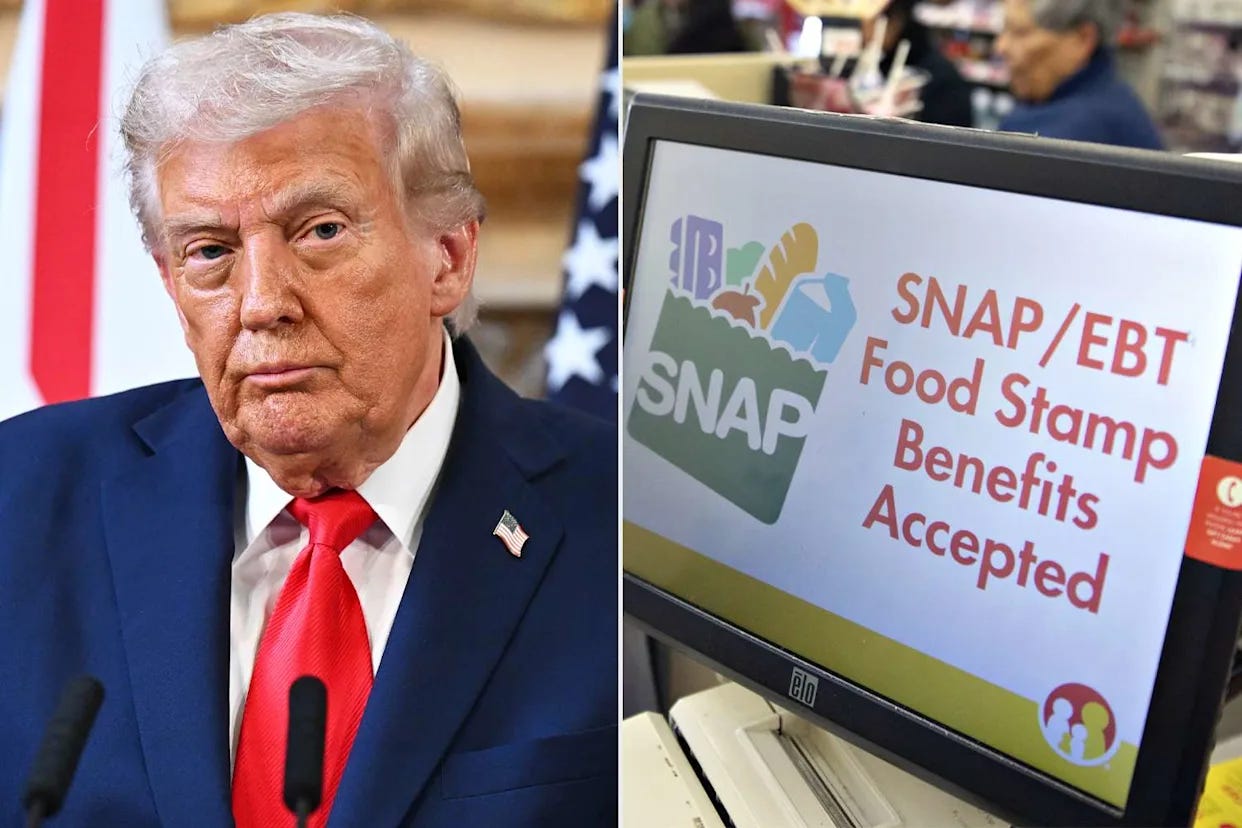
There is a peculiar cruelty in how we speak of hunger in America.
We have constructed an elaborate mythology around poverty—one that insists that suffering must be deserved, that deprivation builds character, that those who accept help are somehow complicit in their own diminishment. Nowhere is this mythology more pernicious than in our national conversation about the Supplemental Nutrition Assistance Program, known as SNAP, or food stamps.
The rhetoric is familiar, almost ritualistic in its repetition: welfare queens gaming the system, able-bodied adults choosing dependency over work, taxpayer dollars funding irresponsibility. These narratives have a gravity to them, a weight that pulls our national discourse away from what SNAP actually is—a program that literally keeps people alive.
I want to tell you who really receives SNAP benefits, because the distance between perception and reality here is vast enough to swallow whole truths.

Thirty-nine percent of SNAP recipients are children. Children. Not scheming adults manipulating a system, but young people whose primary transgression is being born into poverty. Another 10 percent are elderly Americans, people who spent decades contributing to a society that now requires them to prove their worthiness to eat. Roughly 20 percent of recipients are individuals with disabilities. The majority of working-age, non-disabled adult recipients are already employed—they work jobs that simply don’t pay enough to cover both rent and food, a choice no one should have to make in the wealthiest nation on earth.
“Thirty-nine percent of SNAP recipients are children. Children. Not scheming adults manipulating a system, but young people whose primary transgression is being born into poverty.”
These are not abstractions. Behind every percentage point is a grandmother rationing her medications to afford groceries, a child whose cognitive development suffers from chronic hunger, a parent working two jobs who still cannot fill the refrigerator.
The evidence of SNAP’s efficacy is not anecdotal or sentimental—it is measurable, reproducible, scientific. Dr. Seth Berkowitz and colleagues, writing in JAMA Internal Medicine, found that SNAP participation reduces healthcare expenditures among low-income adults, particularly those managing diabetes and cardiovascular disease.
Think about that for a moment: feeding people costs us less than treating the diseases that malnutrition causes. The math is almost insultingly simple, yet we resist it.
The research on children is even more stark. Studies published in the American Journal of Preventive Medicine and Pediatrics demonstrate that SNAP participation is associated with lower odds of poor health status, reduced developmental risk, and decreased emergency department utilization. Children with access to adequate nutrition are healthier, develop better, and require less acute medical intervention. This should not be surprising, and yet we treat it as though it were some radical proposition.
For older adults and racial minorities—populations that bear disproportionate burdens of diet-related disease—SNAP eligibility is associated with reduced prevalence of diabetes, hypertension, and stroke. When policymakers expanded SNAP benefits, researchers documented improvements in diabetes control and cholesterol.
Food, it turns out, is medicine.
Who knew?
There is something deeply American about our cognitive dissonance here. We claim to value self-sufficiency while structuring an economy that makes it impossible for millions to achieve. We say we care about children while debating whether they deserve to eat. We present ourselves as a Christian nation while requiring the poor to perform constant acts of justification for their hunger.
“We say we care about children while debating whether they deserve to eat. We present ourselves as a Christian nation while requiring the poor to perform constant acts of justification for their hunger.”
The mythology we’ve constructed about SNAP serves a purpose, though not a noble one. It allows us to avoid examining the systems that create poverty in the first place—the jobs that don’t pay living wages, the healthcare costs that bankrupt families, the housing markets that price out workers, the educational inequities that limit opportunity. If we can convince ourselves that poverty is a personal failing, we need not interrogate it as a policy choice.
But SNAP is not a handout or an act of charity. It is a recognition of a fundamental truth: that in a society as wealthy as ours, no one should go hungry. It is, quite literally, an investment in human survival and flourishing. Every dollar spent on SNAP generates economic activity. Every child fed is a child who can learn. Every elderly person who can afford groceries is someone who maintains dignity in their final years.
The medical literature I’ve cited here represents thousands of hours of research, millions of data points, peer review by experts across institutions. Research examining diet quality among food-insecure adults confirms that SNAP participation is associated with improved dietary quality and healthier weight status. Moreover, interventions combining financial incentives with nutrition education for SNAP beneficiaries demonstrate the strongest improvements in dietary intake, suggesting that thoughtful program enhancements could amplify these benefits.
It is as close to consensus as we get in social science: SNAP improves health outcomes. It reduces food insecurity. It lowers healthcare costs. It helps vulnerable populations survive and, occasionally, thrive.
Yet we continue to debate it as though these were open questions. We continue to means-test and stigmatize and create bureaucratic obstacles, as though the hungry must prove themselves worthy of eating. We continue to speak of program costs without acknowledging the human costs of going without.
I think often about what it means to live in a nation that has the resources to end hunger but lacks the will. About what it says about us that we can precisely calculate the benefits of feeding people—the reduced emergency room visits, the improved diabetes numbers, the better developmental outcomes—and still argue about whether it’s worth doing.
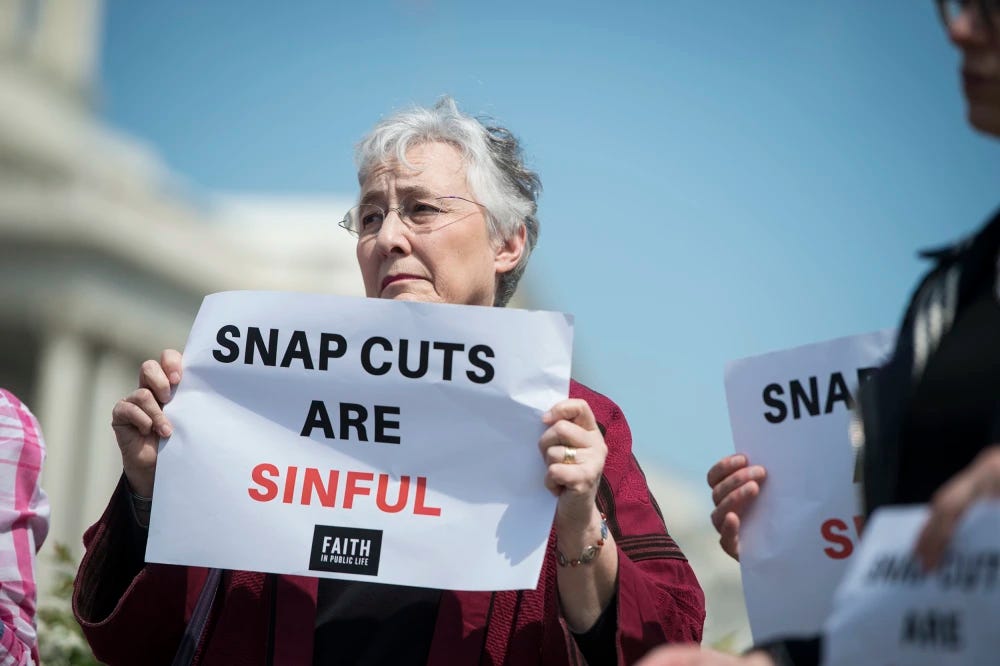
The architecture of SNAP is invisible to most Americans who don’t need it. They don’t see the difference between a child who eats breakfast and one who doesn’t, between an elderly person who can afford their medications and their meals and one who must choose, between a person with diabetes who can manage their disease through diet and one whose condition deteriorates into crisis.
But that invisibility does not make it less real. The lives saved are not less saved because they are not counted. The suffering prevented is not less prevented because it is not seen.
We have constructed elaborate justifications for letting people go hungry, narratives that comfort us in our indifference. But beneath all the rhetoric and mythology is a simple, stubborn fact: SNAP works. It saves lives.
And in a just society, that would be enough.
Excellent article. 👍