

The Problem Was Never Just PCOS
How medicine came to confuse women's health with reproductive health

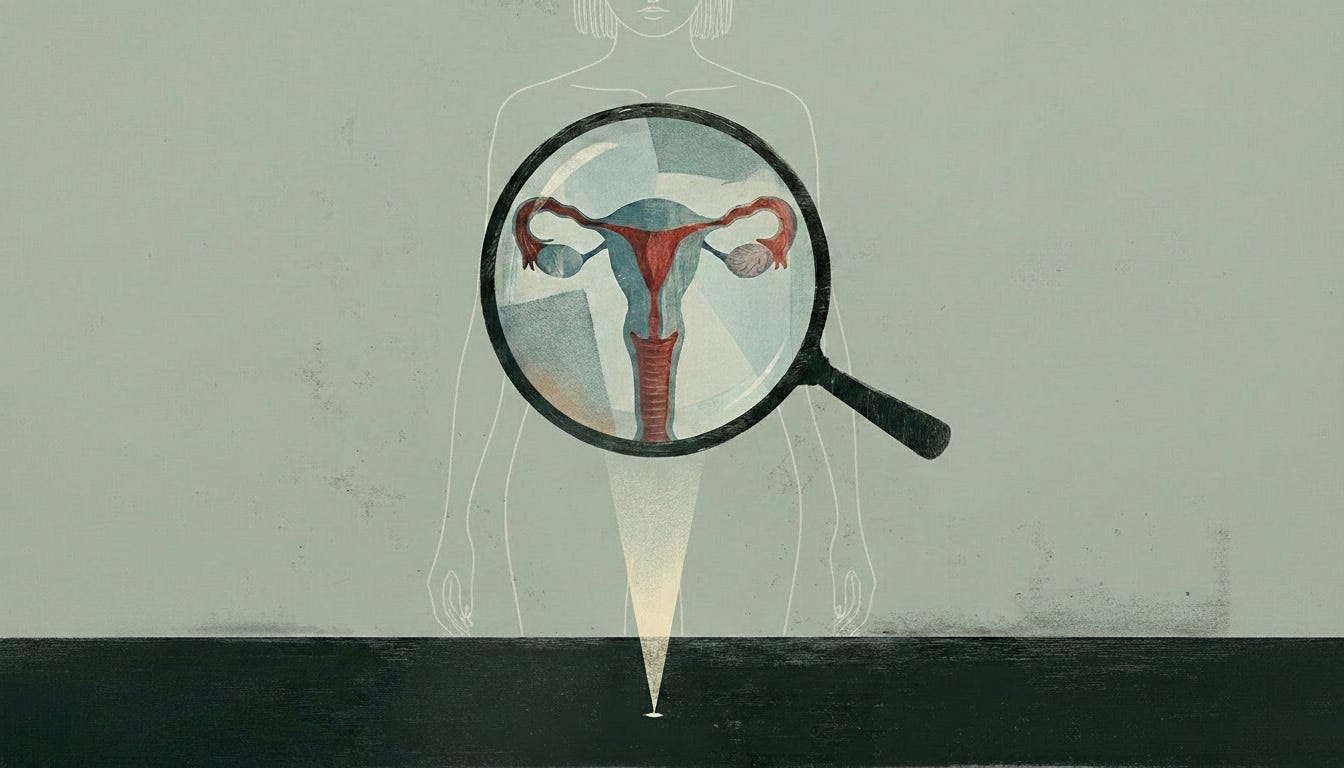
The “Rotterdam Criteria”
In May 2026, something unusual happened in medicine.
One of the most common disorders affecting women received a new name.
After a global consensus process involving 56 organizations and more than 14,000 participants, experts formally retired the term Polycystic Ovary Syndrome (PCOS) and replaced it with a new one: Polyendocrine Metabolic Ovarian Syndrome, or PMOS.
What struck me most was the reason: According to the group, the old name, “PCOS”, no longer reflected the science. For decades, physicians, researchers, and patients alike have been using a label that emphasized the ovaries and the appearance of “cysts” while obscuring what many experts now recognize as the central features of the condition: problems with metabolism, blood sugar regulation, hormones, and long-term health.
Medicine RARELY renames diseases.
So when it does, it’s worth asking…why?
For me, the answer begins in medical school.
Like most physicians of my generation, I learned PCOS through something called “The Rotterdam criteria”.
After ruling out other causes, a woman needed 2 of 3 findings to get a diagnosis:
Irregular ovulation, which often shows up as infrequent, unpredictable, or completely absent periods.
Hyperandrogenism, a medical term for excess male hormones that can lead to symptoms like unwanted facial hair, acne, or thinning hair on the scalp.
Polycystic ovaries, an ultrasound finding in which the ovaries contain an unusually large number of small immature follicles—structures often called “cysts,” (even though they are not actually cysts in the traditional sense).
That was the framework. That was the disease.
It was presented as a story about ovaries, irregular menstrual cycles and fertility impairment—and it is those things. But what I find striking now isn’t what the diagnostic criteria included —but what they left out.
There was no mention of insulin resistance, despite the fact that it is now understood to be one of the central drivers of the condition.
There was no mention of diabetes risk — despite women with PCOS facing nearly 3 times the odds of type 2 diabetes and close to 4 times the odds of pre-diabetes compared to women without the condition.
No mention of cardiovascular disease — despite a significantly elevated risk of coronary heart disease, measurable and documented, independent of body weight.
No mention of depression — up to 4 times higher odds.
No mention of anxiety — up to 5 times higher odds.
No mention of sleep apnea, which is elevated in women with PCOS regardless of BMI.
And there was certainly no mention of the profound and well-documented impact the condition has on a woman’s quality of life.
The Rotterdam criteria were not wrong—in fact, they were clinically useful.
But beyond that, they did something else, too: they taught a generation of physicians what to focus on when they treated at a woman with this condition. In other words, they trained clinical attention toward the reproductive aspects of the condition—almost exclusively.
And that is what had been bothering me.
The more women with PCOS I’ve cared for, the more I noticed a disconnect between the condition medicine taught me to recognize and the condition many women were actually living with.
The Disease Women Were Actually Experiencing
The women who came to my practice with PCOS rarely led with fertility. Some did — infertility is a real and painful consequence of the condition for many — but most of them led with the struggles they were experiencing in their lives.
They described:
Fatigue — a bone-deep fatigue that didn't always get better with sleep
Weight gain that seemed to defy their diets and their efforts (and for many, unfortunately, the shame that followed)
Intense cravings for carbohydrates and sugar that no one had ever connected to insulin resistance
Irregular periods that sometimes disappeared for months and then returned without warning
Hair where they didn’t want it and thinning where they did — hirsutism (the medical name for hair growth in women occurring in a male-like pattern such as on the lips or chin) and hair loss in the scalp
Persistent acne that had been treated in isolation, without any clinician connecting it the endocrine disorder driving it
Depression and anxiety that had been treated as separate problems with separate referrals
These women were not describing a condition of the ovary—they were describing a whole-body experience — biological, psychological, and social. Their lives were being shaped by a condition that medicine had came them a name for— and then, in many cases, not much else.
The diagnostic and management pathway many of them encountered reflected this narrowness. They were seen by their primary care provider or gynecologist for their irregular periods, were often prescribed oral contraceptives, and then sent on their way.
The increased cardiovascular risk was rarely discussed. Mental health was rarely integrated into the plan. When they returned with weight gain, they were told to lose weight. When they returned with depression, they were referred out. When they returned still struggling, they were sometimes told — implicitly or explicitly — that their problems were a matter of lifestyle.
Many of them had spent years being evaluated through a single lens: the reproductive lens.
Were they ovulating? Could they get pregnant? Was their cycle regular?
These were real questions—but not the whole question. And for many women, they were not even the most pressing question.
That disconnect raises an uncomfortable question: How did one of the most common endocrine disorders affecting women become defined primarily by its effects on reproduction?
What’s in a Name?
The rationale for the new name was explicit: the old one was a misnomer.
The term “polycystic” implied that the ovaries were filled with pathological cysts.
They are not.
The follicles that appear on ultrasound are arrested — small, multiple, immature — but they are not cysts in any conventional sense. Yet 47 percent of women with PCOS incorrectly believe that ovarian cysts are a key feature of their condition.
The name taught them the wrong thing about their own disease.
More fundamentally, the term “polycystic ovary syndrome” oriented attention toward the ovary — as though the ovary were the origin of the problem. The new name, PMOS, incorporates “polyendocrine” and “metabolic” because those are the systems actually in disarray: the hypothalamus, the pituitary, the adrenal glands, the pancreas, the insulin signaling pathways that run through nearly every organ.
The polycystic appearance of ovaries on ultrasound is, in the current understanding, a downstream manifestation — a consequence of the endocrine and metabolic dysfunction, not its cause. Yet for decades, it was in the name.
It was the name.
Names are not neutral. Names reveal what institutions think is important. They direct attention. They shape what gets funded, what gets taught, and what gets asked in the clinical encounter. The name "polycystic ovary syndrome" told clinicians where to look: the ovary. It told researchers what to study: the follicle. It told patients what was wrong with them: their ovaries.
But names don't emerge from nowhere. They reflect what the people who create them have been trained to see — and what they haven't.
When Women’s Health Became Reproductive Health
To understand how PCOS came to be defined through a reproductive lens, it helps to understand that medicine was already routinely looking through that lens by the time two American obstetrician-gynecologists — Drs. Irving F. Stein Sr. and Michael L. Leventhal — published their landmark paper on the condition in 1935.
It was literally titled "Amenorrhea Associated with Bilateral Polycystic Ovaries."
They were seeing women who presented with absent periods and infertility—and their clinical work centered on restoring menstruation and fertility through surgery. Meanwhile, insulin had only recently been discovered—the concepts of insulin resistance and metabolic syndrome did not exist yet.
And so, their reproductive framing was not a failure of imagination—it was more a reflection of what medicine could see in 1935. The ovaries were visible. The infertility was obvious. The metabolic dysfunction, though, was harder to see.
And so the ovaries became the organizing feature of the syndrome, and the name followed.
The problem was not the name in 1935; the problem is that medicine kept using that reproductive framing long after the evidence demanded something different.
PCOS did not create the reproductive lens.
It inherited it.
In fact, the institutions that built modern women’s healthcare did not only fail to correct this—They deepened it.
When the World Health Organization (WHO) was founded in 1948, its constitution referenced women’s health only in the context of maternal health. When the Declaration of Alma-Ata was signed in 1978 — a landmark commitment to primary health care as a human right — it remained focused on women primarily as mothers, caregivers, and recipients of family planning services.
As one analysis of gender and global health later observed, women were historically regarded “of interest only in relation to their reproductive organs or their ability to adequately mother their offspring.”
This was not incidental—It was structurally embedded. And its consequences extended well beyond PCOS:
Cardiovascular disease is the leading cause of death among women in the United States — responsible for roughly one in three female deaths. For decades, it was studied almost exclusively in men. Women were underrepresented in clinical trials, their symptoms were measured against a male standard, and when they didn’t match — no crushing chest pain, just fatigue, nausea, a vague sense of something wrong — their heart attacks were misdiagnosed as gastrointestinal complaints or anxiety. The default cardiac patient in medicine was male. Women paid for that assumption with their lives.
Endometriosis affects roughly one in ten women. The average time from first symptoms to diagnosis is nearly ten years. In study after study, the delay traces back to the same source: women’s pain was normalized, minimized, or attributed to the ordinary discomforts of being female. Prior to diagnosis, 63% of women had their symptoms dismissed. Sixty percent reported that their physician did not validate their concerns when they sought treatment. A decade of suffering resulted, because medicine had been trained to expect women to endure reproductive pain without complaint.
PCOS is not an outlier. It is part of a pattern.
Until 1993, women of childbearing age were routinely excluded from clinical trials. The rationale was ostensibly one of safety — the risk of harm to a potential fetus. But the consequence was a medical knowledge base built almost entirely on male physiology.
A recent analysis of women’s health research at the NIH has documented how hard institutions have had to work in recent years simply to correct that omission. A 2022 study analyzing publications across six major women’s health journals found that 44% of all published topics were reproductive health — while cardiovascular disease, infectious disease, musculoskeletal disorders — the leading causes of morbidity and mortality in women — were dramatically underrepresented.
Women’s health, as reflected in its own journals, was still largely synonymous with reproductive health.
As the health policy scholar Carol Weisman documented, women’s health was historically “equated with reproductive functions,” and broader definitions only emerged in recent decades, driven largely by feminist critiques of medical institutions and advocacy that demanded a different frame.
PCOS inherited a way of thinking that was already decades old. And the institutions that should have updated it instead reinforced it.
Seen in that context, the history of PCOS begins to look less like an anomaly and more like a symptom.
The Framework Beneath the Name
The reproductive framework did not simply give PCOS a misleading name. It shaped every institution through which the condition was understood and managed.
Research funding flowed through reproductive channels. At the NIH, PCOS funding was channeled primarily through reproductive health programs — which meant that studies asked reproductive questions, produced reproductive findings, and trained subsequent researchers to ask reproductive questions again. The metabolic, cardiovascular, and psychological dimensions of the condition were not the focus of inquiry because they were not the focus of the funding.
Medical education reflected the same prioritization. PCOS was taught primarily as a condition relating to obstetrics and gynecology. It appeared in the section on menstrual irregularity. It was covered in the context of infertility management and ovulation induction. When I trained, insulin resistance was more a “footnote”. Cardiovascular risk was mentioned, if at all, in the same breath as other complications — not as a central feature requiring central attention.
Disease classification siloed PCOS into gynecology in ways that meant non-gynecological providers rarely considered it. A woman presenting to her PCP with fatigue, weight gain, and depression was unlikely to receive a PCOS workup. A woman presenting to a Cardiologist with metabolic risk factors was unlikely to be asked about her cycle history. The condition lived in the gynecologist’s office, and that is where it stayed.
Public understanding followed institutional understanding. Because the condition was framed as primarily reproductive, women with PCOS often did not know to connect their metabolic symptoms — their cravings, their weight gain, their insulin resistance — to the same underlying disorder. Many reported learning more from patient communities online than from their physicians. Many reported feeling confused about what their diagnosis actually meant for their long-term health.
The 2023 International Evidence-Based Guidelines for PCOS management represent a significant effort to correct this. They mandate assessment and management of reproductive, metabolic, cardiovascular, dermatologic, sleep, and psychological features — and they call explicitly for a lifelong health plan, not episodic gynecological care. That the guidelines felt necessary — that they had to say explicitly what had been omitted — is itself evidence of what the framework had cost.
The name did not create the framework. The framework created the name.
Medicine did not simply misunderstand a disease. It understood the disease through a particular way of seeing women.
And when institutions learn to see illness through a very particular (and very limited) lens, patients inevitably feel the consequences.
What Women Paid for That Framework
The costs of all of this is not theoretical.
Women with PCOS experience:
Delayed diagnosis — on average, years between the onset of their symptoms and a formal diagnosis, during which time their metabolic risk accumulates without monitoring or intervention
Confusion about their own condition — because the name points to ovaries, and many patients don’t understand why their energy, their weight, their mood, and their skin are all part of the same story
Shame and self-blame — especially around weight, because insulin resistance is rarely explained, and weight gain is routinely attributed to poor habits rather than to the metabolic dysfunction actually driving it
Dismissal — symptoms are frequently minimized, fragmented across specialties, or attributed to anxiety and stress
Missed metabolic risk — the insulin resistance that sits at the center of the condition’s pathophysiology creates compounding cardiovascular and metabolic risk over time; when it goes unaddressed, so does that risk
Fragmented care — a dermatologist for the skin, a psychiatrist for the mood, a gynecologist for the cycle, an primary care provider for the weight, none of them necessarily communicating, none of them necessarily connecting the dots
These are the predictable outcomes of a framework that located a metabolic disorder in the reproductive system—and kept it there.
The global survey conducted in advance of the renaming says a lot: Women with PCOS consistently reported that the name “polycystic ovary syndrome” was confusing, stigmatizing, and incomplete — and that it failed to capture what they were actually living with. They reported that it contributed to the dismissal they encountered in clinical encounters, and that it limited their ability to advocate for themselves because they didn’t have language that matched their experience.
Today, up to 70% of individuals affected by PCOS remain undiagnosed. A number like that does not reflects a rare or subtle condition—it reflects a framework failure.
Which is exactly why the debate over what to call this condition matters more than it might seem.
The Problem Was Never Just PCOS
The renaming of PCOS to PMOS is important because in medicine, what we call a disease often determine what we do about it. When the name of a condition changes — when “polycystic ovary syndrome” becomes “polyendocrine metabolic ovarian syndrome” — it changes what physicians look for, what researchers study, what patients understand about their own bodies, and how institutions allocate attention and resources.
A new name that encodes the metabolic and endocrine reality of this condition is a genuine corrective. It is not nothing. But it’s also not enough.
Not on its own.
Because the name was never the origin of the problem. It was a symptom of it.
The real problem is older and larger. It is the set of assumptions — embedded in research design, funding structures, medical education, clinical classification systems, and institutional practice — that equated women’s health with reproductive health. Medicine, research and public health still utilize the reproductive system as the organizing frame for understanding women’s bodies.
The PCOS story is, in this sense, a story about attention.
It’s about what medicine chooses to see when it looks at women. It’s about what biomedicine chooses to prioritize, to fund, to teach, and to name. It’s about a condition that is fundamentally metabolic was seen through a reproductive frame, and the women who lived with it absorbed the consequences of that seeing for decades.
Changing the name is the beginning of something — an institutional acknowledgment that the framing was wrong, that something important was missed, and that a correction is long overdue.
But what the correction requires is not just new nomenclature—It requires a broader reckoning with how medicine has historically reduced women’s bodies to their reproductive function, and a genuine commitment to what a more complete clinical attention would look like.
That means metabolic screening from the point of diagnosis. It means cardiovascular risk addressed throughout a woman’s life, and not only during her reproductive years. It means mental health integrated into the plan, not referred out as a separate problem. It means research that asks metabolic questions and funds metabolic answers. It means medical education that teaches the whole condition — not the part that sits most comfortably within an old framework that no longer holds.
The problem was never just PCOS.
The problem was a healthcare system that looked at women struggling with exhaustion, insulin resistance, depression, weight gain, and declining health — and kept asking:
“Are you ovulating?”
Thank you for Reading Health is Political
Dr. Brittani James is a Board-certified Family Medicine physician and co-founder of Twin Village Health, an Integrative medical practice in Chicago which provides physical and mental health care under one roof. She writes Health Is Political on the structural forces that shape who gets sick, who gets care, and who gets believed.
If this essay resonated with you, consider subscribing, sharing it with a friend, or joining the conversation in the comments
So... An obese woman is given lifestyle counselling, Metformin for prediabetes, offered the contraceptive pill for hirsutism and counselled on cosmetic strategies to manage this... Her irregular periods don't bother her, she has the one child she wants, ... seriously, what benefit is adding a PCOS diagnosis??? It just seems like a huge fuss about nothing. An attempt to make women into perpetual patients, to create anxiety and distress/depression over this terrible "PCOS" they have, to apply another disease label to women en masse, to encourage them to view themselves as sick, diseased, at risk, and to obssess over their bodies
You perfectly describe the disconnect between theory and real life.